Royal Publisher and Distributor New Delhi-2
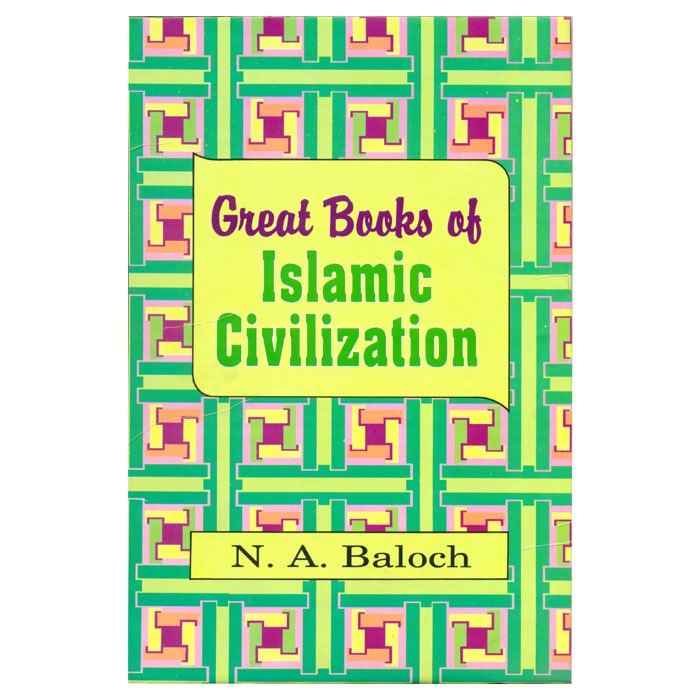
Great Books of Islamic Civilization
Great Books of Islamic Civilization
Couldn't load pickup availability
In the history of world civilizations, Islamic civilization has been essentially a faith-cum-knowledge based civilization. The quranic revelation simultaneously strengthened the foundations of faith and knowledge. The genesis of search for knowledge and achievement of excellence, the distinctive characteristics of the early Islamic society, may be explained briefly.
History of the Islamic peoples (the ummah), and of Islamic education, started with the quranic imperative ‘Read’! which made learning compulsory. The quran in itself became an inexhaustible source of knowledge, and also the revelation established the undisputed superiority of knowledge and strongly motivated the believer to seek more and more of knowledge. Consequently, the prophet (sal’am) declared that learning was compulsory for every ‘believer’ (muslim), man and woman, and that knowledge was to be sought for even though it be in china- i.s. wherever it was available, through any language, any teacher and in any country. There was a further elaboration that knowledge for mankind must multiply with the instrument of writing-the tip of the pen, and that mankind had beendestined to know the unknown. Human beings were called upon to see , to observe , to ponder, to think, to reflect , to understand and to learn. In effect, ISLAM became a way of living and learning, QURAN the book, and PROPHET the teacher. Primacy of knowledge was affirmed and the concept of compulsory learning and education was confirmed.
As the early Islamic community took to education, ‘childhood Education’ (Ta’lim al-aftal) came to be viewed by the muslim educator as the fundamental and foundational stage of education. As a result, the first organized educational institution- the universal primary school-was born. The kuttab (primary school) was held under any roof that was then available- such as mosques, houses of teachers and of learned men, palaces, bookshops, literacy salons, tents and open air in the desert. In the eastern world of Islam this elementary school became known as Maktab and in the fareast (Malaysia-indonesia) as pondok. With further development of formal system of education, madrasahs were established as the more distinct higher educational institutions outside the mosques in the 5th century A.H.
Product Information
| Writer | N.A. Baloch |
|---|---|
| Publication Year | 2006 |
| Subject | Islamic history |
| Binding | Hardcover |
| Pages | 238 |
| Language | ["English "] |
Share